FURNITURE: Enhancing Online Furniture Shopping with AR

FURNITURE: Enhancing Online Furniture Shopping with AR

FURNITURE: Enhancing Online Furniture Shopping with AR

FURNITURE: Enhancing Online Furniture Shopping with AR

an Immersive Furniture Shopping Experience Through Augmented Reality and User-Centric Design.

My Role

Idea, UI/UX Design
Idea, UI/UX Design

Timeline

6 Weeks
6 Weeks

Tools

Figma, Illustrator, Photoshop
Figma, Illustrator,
Photoshop

Project Overview

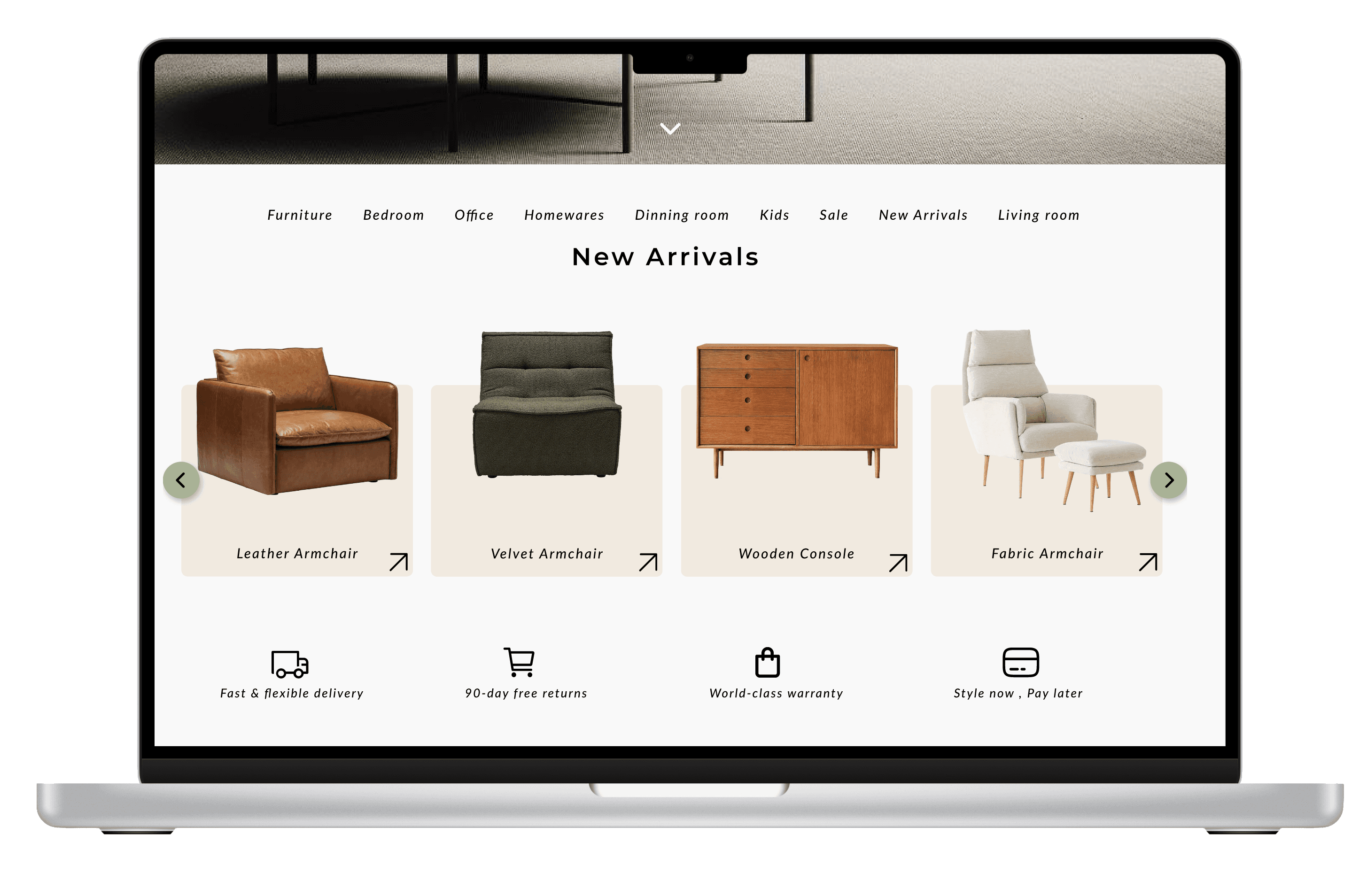
Furniture is a modern furniture website designed to meet the unique preferences and lifestyles of users. It's a platform that includes a diverse range of furniture styles and an inspiration blog for users to discover trends and interior design tips.

Problems

  • Lack of a user-friendly website interface to enhance the overall shopping experience.

  • In online furniture websites users experienced difficulty visualizing furniture in their own spaces, leading to uncertainty in purchasing decisions.

  • Also users encountered frustration during the checkout process, resulting in abandoned carts and missed conversion opportunities. The multi-step checkout was perceived as time-consuming, leading to a high drop-off rate.


Goals and solutions

  • My aim is to create an immersive and user-friendly website including Augmented Reality and an AR tutorial page for users who don't know how to use it and visualizing furniture in real spaces, providing a realistic preview.

  • Also creating a streamline checkout process with fewer steps to reducing cart abandonment and a guest checkout option without requiring registration.

My Role

Idea, UI/UX Design

Timeline

6Weeks

Tools

Figma, Illustrator,
Photoshop

Project Overview

Furniture is a modern furniture website designed to meet the unique preferences and lifestyles of users. It's a platform that includes a diverse range of furniture styles and an inspiration blog for users to discover trends and interior design tips.

Problems

  • Lack of a user-friendly website interface to enhance the overall shopping experience.

  • In online furniture websites users experienced difficulty visualizing furniture in their own spaces, leading to uncertainty in purchasing decisions.

  • Also users encountered frustration during the checkout process, resulting in abandoned carts and missed conversion opportunities. The multi-step checkout was perceived as time-consuming, leading to a high drop-off rate.


Goals and solutions

  • My aim is to create an immersive and user-friendly website including Augmented Reality and an AR tutorial page for users who don't know how to use it and visualizing furniture in real spaces, providing a realistic preview.

  • Also creating a streamline checkout process with fewer steps to reducing cart abandonment and a guest checkout option without requiring registration.

User Research

User Research

Survey

Survey

I conducted a comprehensive online survey with participants aged between 20 to 50.


The survey gathered data on what furniture styles people like, what influences their furniture buying decisions, the importance of customer reviews, challenges they encountered during the checkout process, and how satisfied they are with their online furniture shopping experiences.

Key Findings


  • Users struggled to visualize furniture in their homes before purchase, leading to uncertainty about decor harmony.

  • A significant number of users preferred modern and minimalistic furniture styles.

  • Participants shop for furniture occasionally or very frequently, primarily using mobile devices.

  • User reviews played a crucial role in decision-making, influencing trust in furniture quaity.

  • Limited awareness and lack of education on AR features led to underutilization.

  • Users faced difficulties in the checkout process, abandoning carts due to the perceived time-consuming multi-step checkout.

  • Participants highlight the need for an AR studio, realistic AR features, user-friendly website, simple payment processes, and high-quality product images.

User Interviews

User Interviews

I conducted interviews with participants who regularly shop for furniture online. The goal was to understand their pain points, needs, and preferences when using furniture websites.

Key Insights


  • Users struggled to imagine furniture in their space; AR features were highly valued.

  • Cluttered websites overwhelmed users; better filtering options were desired.

  • Detailed descriptions, dimensions, and materials were essential for decision-making.

  • A simple, streamlined checkout was important, with cart abandonment due to complex steps.

  • Trusted reviews were crucial for making informed purchase decisions.

Key Insights


  • Users struggled to imagine furniture in their space; AR features were highly valued.

  • Cluttered websites overwhelmed users; better filtering options were desired.

  • Detailed descriptions, dimensions, and materials were essential for decision-making.

  • A simple, streamlined checkout was important, with cart abandonment due to complex steps.

  • Trusted reviews were crucial for making informed purchase decisions.

"When I'm shopping for furniture online...


I need to be able to see how it looks in my home—without that, it's hard to commit."

"The checkout process...


needs to be straightforward. If it's too complicated, I end up abandoning my cart."

"I want to narrow down my choices quickly...


but most websites make it difficult to filter the options I care about."

"Before I buy...


I always check customer reviews. I need that trust to feel confident about my purchase."

"Before I buy...


I always check customer reviews. I need that trust to feel confident about my purchase."

"When I'm shopping for furniture online...


I need to be able to see how it looks in my home—without that, it's hard to commit."

"The checkout process...


needs to be straightforward. If it's too complicated, I end up abandoning my cart."

"Before I buy...


I always check customer reviews. I need that trust to feel confident about my purchase."

"I want to narrow down my choices quickly...


but most websites make it difficult to filter the options I care about."

Competitive Benchmarking

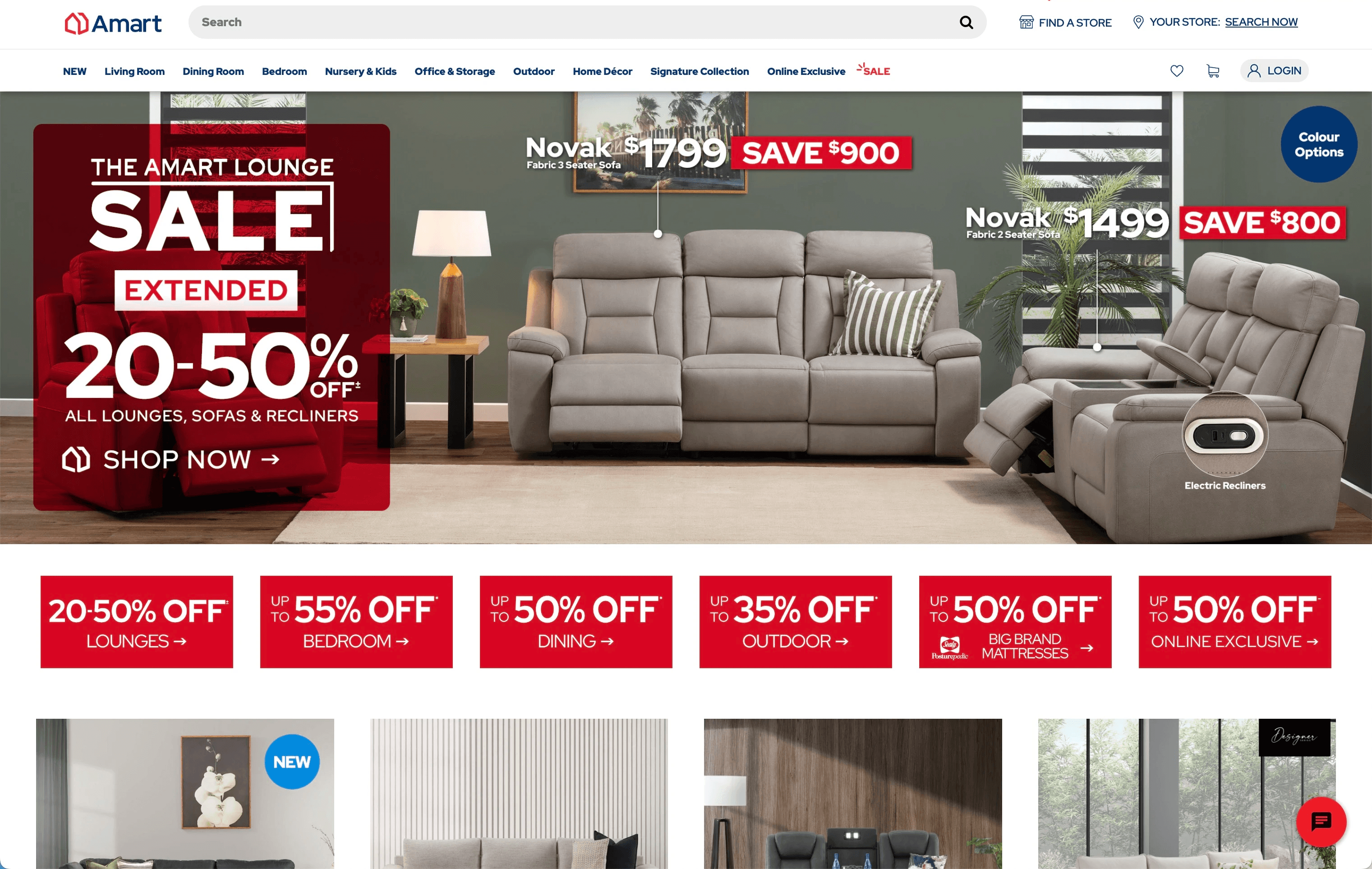
I analyzed some competitor websites in the furniture industry to understand the strengths and weaknesses of their platforms.


Here's a brief competitor analysis:


🟢 Pros


  • Clean and simple design, easy navigation.

  • Prominent categories for quick product discovery.

  • Clear product details with multiple images.


🔴 Cons


  • The site feels outdated in terms of visual appeal.

  • Limited filtering options, making product searches difficult.

🟢 Pros


  • Smooth navigation and clear call-to-actions.

  • Modern and visually appealing design with a lifestyle focus.

  • Detailed product pages with design inspiration.


🔴 Cons


  • Checkout process can feel cumbersome due to multiple steps.

  • Slow loading times for high-resolution images.

🟢 Pros


  • Minimalist design, with a strong focus on product benefits.

  • Seamless integration of AR for furniture visualization.

  • Smooth and fast checkout process.


🔴 Cons


  • Lack of customer reviews directly on product pages.

  • Limited product range filters.

🟢 Pros


  • Functional design, easy to navigate for quick purchases.

  • Clear product information and strong filtering options.

  • Visual simplicity with user-friendly interaction.


🔴 Cons


  • Limited inspiration sections or lifestyle images for context.

  • Feels less modern and visually engaging.

💡Ideas...

Enhanced Product Visualization: Integrate Augmented Reality (AR) to help users visualize furniture in their homes.

Streamlined Navigation: Create a user-friendly interface with improved filtering options to simplify product searches.

Detailed Product Information: Offer comprehensive descriptions, including dimensions, materials, and customer reviews for informed decisions.

Simplified Checkout: Design a smooth, straightforward checkout process to minimize cart abandonment.

💡 Ideas...

💡 Ideas...

Enhanced Product Visualization: Integrate Augmented Reality (AR) to help users visualize furniture in their homes.

Streamlined Navigation: Create a user-friendly interface with improved filtering options to simplify product searches.

Detailed Product Information: Offer comprehensive descriptions, including dimensions, materials, and customer reviews for informed decisions.

Simplified Checkout: Design a smooth, straightforward checkout process to minimize cart abandonment.

Competitive Benchmarking

I analyzed some competitor websites in the furniture industry to understand the strengths and weaknesses of their platforms.


Here's a brief competitor analysis:


🟢 Pros


  • Clean and simple design, easy navigation.

  • Prominent categories for quick product discovery.

  • Clear product details with multiple images.


🔴 Cons


  • The site feels outdated in terms of visual appeal.

  • Limited filtering options, making product searches difficult.

🟢 Pros


  • Smooth navigation and clear call-to-actions.

  • Modern and visually appealing design with a lifestyle focus.

  • Detailed product pages with design inspiration.


🔴 Cons


  • Checkout process can feel cumbersome due to multiple steps.

  • Slow loading times for high-resolution images.

🟢 Pros


  • Minimalist design, with a strong focus on product benefits.

  • Seamless integration of AR for furniture visualization.

  • Smooth and fast checkout process.


🔴 Cons


  • Lack of customer reviews directly on product pages.

  • Limited product range filters.

🟢 Pros


  • Functional design, easy to navigate for quick purchases.

  • Clear product information and strong filtering options.

  • Visual simplicity with user-friendly interaction.


🔴 Cons


  • Limited inspiration sections or lifestyle images for context.

  • Feels less modern and visually engaging.

🟢 Pros


  • Clean and simple design, easy navigation.

  • Prominent categories for quick product discovery.

  • Clear product details with multiple images.


🔴 Cons


  • The site feels outdated in terms of visual appeal.

  • Limited filtering options, making product searches difficult.

🟢 Pros


  • Smooth navigation and clear call-to-actions.

  • Modern and visually appealing design with a lifestyle focus.

  • Detailed product pages with design inspiration.


🔴 Cons


  • Checkout process can feel cumbersome due to multiple steps.

  • Slow loading times for high-resolution images.

🟢 Pros


  • Minimalist design, with a strong focus on product benefits.

  • Seamless integration of AR for furniture visualization.

  • Smooth and fast checkout process.


🔴 Cons


  • Lack of customer reviews directly on product pages.

  • Limited product range filters.

🟢 Pros


  • Functional design, easy to navigate for quick purchases.

  • Clear product information and strong filtering options.

  • Visual simplicity with user-friendly interaction.


🔴 Cons


  • Limited inspiration sections or lifestyle images for context.

  • Feels less modern and visually engaging.

Competitive Benchmarking

I analyzed some competitor websites in the furniture industry to understand the strengths and weaknesses of their platforms.


Here's a brief competitor analysis:


User Archetypes

User Archetypes

User Archetypes

👩🏻


Sophie is a 30-year-old interior designer in San Francisco known for her stylish and functional designs. She frequently browses furniture websites and social media for inspiration and unique pieces. She values quality and aesthetics but must stay within her clients' budgets.

👩🏻


Sophie is a 30-year-old interior designer in San Francisco known for her stylish and functional designs. She frequently browses furniture websites and social media for inspiration and unique pieces. She values quality and aesthetics but must stay within her clients' budgets.

Frustrations and Pain points


  • Difficulty finding unique, high-quality furniture pieces that meet her design standards.

  • Inconsistent product information, leading to challenges in making informed decisions.

  • Overwhelmed by cluttered websites that make it hard to locate specific styles or inspirations.

  • Limited options that cater to diverse design preferences.

Wants and Needs


  • A diverse selection of furniture styles to enhance her projects.

  • Accurate product information, including dimensions and materials, for informed decision-making.

  • An inspiration section featuring design ideas and color palettes to spark creativity.

  • A streamlined, user-friendly interface for easy navigation and product comparison.

👱🏻‍♂️


Mark is a 40-year-old IT Manager from Denver, focused on family and home improvement. He seeks durable, family-friendly furniture and prefers a single reliable online store. Mark values the convenience of shopping online and uses Augmented Reality (AR) to visualize furniture in his home.

👱🏻‍♂️


Mark is a 40-year-old IT Manager from Denver, focused on family and home improvement. He seeks durable, family-friendly furniture and prefers a single reliable online store. Mark values the convenience of shopping online and uses Augmented Reality (AR) to visualize furniture in his home.

Frustrations and Pain points


  • Difficulty visualizing how furniture will fit in his home without effective AR features.

  • Frustrated by complicated checkout processes that can lead to abandoned carts.

  • Overwhelmed by the volume of choices that make it hard to find the right pieces quickly.

  • Limited budget options that restrict access to high-quality furniture.

Wants and Needs


  • Functional, family-friendly furniture that is both durable and stylish.

  • An easy shopping experience with effective AR capabilities for visualization.

  • Clear, reliable customer reviews to aid in his purchasing decisions.

  • A straightforward checkout process and a range of price points with discounts or financing options.

Information Architecture

Information Architecture

Information Architecture

Information Architecture

User Flow

User Flow

User Flow

This structure highlights the critical user flows of the website and processes the user would use to achieve specific tasks.

Entry point: Landing page Success criteria: Buying a furniture item

Card Sorting

Card Sorting

I conducted open card sorting with 7 participants who represent the target audience of the furniture website to organize the website’s navigation so users can easily find and explore furniture categories.

Instructions: I clearly explained the task to participants and gave them the cards and ask them to sort them into groups that make sense to them.

Observation: I watched how they sort the cards and ask questions if necessary to understand their thought process.


Apply to Design

I used the insights to restructure the navigation and content organization. Also I tested my new design with users and refine based on feedbacks.

Low-fi Wireframes

Low-fi Wireframes

Low-fi Wireframes

Prototyping

Prototyping

Prototyping

Main Features

Main Features

Main Features

Augmented Reality Animation Introduction page

Augmented Reality Animation Introduction page

AR tutorials for users faced with limited awareness of Augmented Reality features

AR tutorials for users faced with limited awareness of Augmented Reality features

AR main product page with filter and product menu.

AR main product page with filter and product menu.

AR main product page with filter and product menu.

AR tutorials for users faced with limited awareness of Augmented Reality features

Augmented Reality Animation Introduction page

User Testing


Objective

I assessed the effectiveness and user-friendliness of both the augmented reality feature and the redesigned checkout process on the modern furniture website. My goal was to understand how users interact, identify pain points, and gather insights for improvement.


Participants

10 participants ranging from ages 20 to 50, with diverse backgrounds.


Tasks

  • Participants select furniture from the website and use the AR feature for visualization.

  • Instructed participants to explore furniture placement options and evaluate AR accuracy.

  • Simulated shopping scenario where participants select items, enter shipping info and proceed to checkout.


Observations

  • Observed ease of AR feature engagement and time taken for visualization task.

  • Gathered feedback on instruction clarity and overall AR experience.

  • Observed interactions and record hesitation during each checkout step.


Feedbacks & Iterations

  • AR feature access was intuitive, with clear prompts guiding users seamlessly.

  • Participants navigated placement options seamlessly within the AR feature.

  • Adding items to the cart was straightforward and user-friendly.

  • Participants navigated checkout steps without significant issues, thanks to a streamlined process.

User Testing


Objective

I assessed the effectiveness and user-friendliness of both the augmented reality feature and the redesigned checkout process on the modern furniture website. My goal was to understand how users interact, identify pain points, and gather insights for improvement.


Participants

10 participants ranging from ages 20 to 50, with diverse backgrounds.


Tasks

  • Participants select furniture from the website and use the AR feature for visualization.

  • Instructed participants to explore furniture placement options and evaluate AR accuracy.

  • Simulated shopping scenario where participants select items, enter shipping info and proceed to checkout.


Observations

  • Observed ease of AR feature engagement and time taken for visualization task.

  • Gathered feedback on instruction clarity and overall AR experience.

  • Observed interactions and record hesitation during each checkout step.


Feedbacks & Iterations

  • AR feature access was intuitive, with clear prompts guiding users seamlessly.

  • Participants navigated placement options seamlessly within the AR feature.

  • Adding items to the cart was straightforward and user-friendly.

  • Participants navigated checkout steps without significant issues, thanks to a streamlined process.

User Testing


Objective

I assessed the effectiveness and user-friendliness of both the augmented reality feature and the redesigned checkout process on the modern furniture website. My goal was to understand how users interact, identify pain points, and gather insights for improvement.
Tasks

  • Participants select furniture from the website and use the AR feature for visualization.

  • Instructed participants to explore furniture placement options and evaluate AR accuracy.

  • Simulated shopping scenario where participants select items, enter shipping info, and proceed to checkout.


Observations

  • Observed ease of AR feature engagement and time taken for visualization task.

  • Gathered feedback on instruction clarity and overall AR experience.

  • Observed interactions and record hesitation during each checkout step.


Questions

  • How intuitive was AR feature access?

  • Were participants seamless in navigating and exploring placement options?

  • How straightforward was the item addition to the cart?

  • Were participants able to navigate checkout steps without issues?


Feedback Inplementations

  • AR feature access was intuitive, with clear prompts guiding users seamlessly.

  • Participants navigated placement options seamlessly within the AR feature.

  • Adding items to the cart was straightforward and user-friendly.

  • Participants navigated checkout steps without significant issues, thanks to a streamlined process.

Final Design

Final Design

Final Design

I introduced a modern and minimalistic design, focusing on high-quality visuals, clear typography, and a neutral color palette.

Also, I ensured the website was fully responsive, optimizing layouts for desktop, tablet, and mobile users.

I Implemented AR features that allow users to virtually place furniture in their homes using their mobile devices and a streamlined checkout process.

I introduced a modern and minimalistic design, focusing on high-quality visuals, clear typography, and a neutral color palette.

Also, I ensured the website was fully responsive, optimizing layouts for desktop, tablet, and mobile users.

I Implemented AR features that allow users to virtually place furniture in their homes using their mobile devices and a streamlined checkout process.

Key Takeaway…

The integration of Augmented Reality (AR), simplified navigation, and a user-focused checkout process significantly enhanced the user experience, leading to better engagement and decision-making.


My Learnings…
Balancing innovation with accessibility is crucial—while AR is a powerful tool, users need a simple interface and clear guidance.User education is essential for the successful adoption of new features like AR.Understanding and addressing user pain points directly leads to improved engagement and satisfaction.

Key Takeaway…

The integration of Augmented Reality (AR), simplified navigation, and a user-focused checkout process significantly enhanced the user experience, leading to better engagement and decision-making.


My Learnings…
Balancing innovation with accessibility is crucial—while AR is a powerful tool, users need a simple interface and clear guidance.User education is essential for the successful adoption of new features like AR.Understanding and addressing user pain points directly leads to improved engagement and satisfaction.

Key Takeaway…

The integration of Augmented Reality (AR), simplified navigation, and a user-focused checkout process significantly enhanced the user experience, leading to better engagement and decision-making.


My Learnings…
Balancing innovation with accessibility is crucial—while AR is a powerful tool, users need a simple interface and clear guidance.User education is essential for the successful adoption of new features like AR.Understanding and addressing user pain points directly leads to improved engagement and satisfaction.

Key Takeaway…

The integration of Augmented Reality (AR), simplified navigation, and a user-focused checkout process significantly enhanced the user experience, leading to better engagement and decision-making.


My Learnings…
Balancing innovation with accessibility is crucial—while AR is a powerful tool, users need a simple interface and clear guidance.User education is essential for the successful adoption of new features like AR.Understanding and addressing user pain points directly leads to improved engagement and satisfaction.

Let'S WORK

Let'S WORK

TOGETHER

TOGETHER

CONTACT NOW

Create a free website with Framer, the website builder loved by startups, designers and agencies.