Reducing Frustration & Boosting Confidence for Job Seekers with an AI-Powered Job Search Platform

Reducing Frustration & Boosting Confidence for Job Seekers with an AI-Powered Job Search Platform

Reducing Frustration & Boosting Confidence for Job Seekers with an AI-Powered Job Search Platform

Applying for multiple jobs is time-consuming and stressful. Job seekers often fill out different forms and tailor resumes repeatedly. To solve this, we designed an AI-powered platform that streamlines applications and saves time.

My Role

UX / UI Designer

Full design process

Tools

Figma, FigJam, Adobe, Maze

Team

Product manager, developers, designers

My Role

UX / UI Designer

Tools

Figma, FigJam, Adobe

Team

Product manager, developers, designers

Team

Product manager, developers, designers

My Role

UX / UI Designer

Tools

Figma, FigJam, Adobe

Problem Discovery

Job seekers often spend hours applying while feeling uncertain, anxious, and lacking confidence in their process.

Manual job hunting is exhausting, inefficient, and demotivating, JSW aimed to solve this.


Our team set out to build an AI job platform from the ground up, a one-stop solution that simplifies the job-seeking journey, from creating a strong application to managing interviews and offers.

Our Assumptions

Before starting our research, we wrote down what we thought might make job searching hard for job seekers of different ages and experience levels. These guesses helped us decide what to focus on in the next steps.

Validating our assumptions

Interviews and surveys revealed job seekers’ frustrations with irrelevant listings and resume uncertainty. They seek relevance, simplicity, and smart AI to enhance job matching, application tracking, and trust.

We conducted online interviews and surveys with a large group of target users to validate our initial assumptions and furthur understand jobseekers main pain points.

We conducted online interviews and surveys with a large group of target users to validate our initial assumptions and furthur understand jobseekers main pain points.

User Archetypes

Refined our key insights into 2 key personas

Competitor Analysis

Understood that platforms like Indeed, LinkedIn, Seek, and Jora offer parts of a good job search experience, but lack a balance of smart AI, easy filtering, and clear application tracking.

AI & Matching
Platforms like Indeed use advanced AI tools to speed up hiring, while others like Seek and Jora lack strong personalization features.

User Experience
Seek and Jora offer clean, simple interfaces, but global leaders like LinkedIn and Indeed often feel cluttered or overwhelming.

Opportunity
Research shows platforms lack a balance between smart AI and intuitive UX, missing chances for better filtering, recommendations, and application tracking.

User Journey Map

Job seekers got frustrated by irrelevant listings, time consuming job applying, and confusing resume expectations, causing uncertainty and extra effort in the job search process.

How can we use AI to simplify applications and boost job seekers’ confidence when applying for multiple roles?

How can we use AI to simplify applications and boost job seekers’ confidence when applying for multiple roles?

Prioritizations Matrix

Identified which features offer the most value with the least effort, and which could be postponed or dropped to streamline development and focus on impact.

Design approach

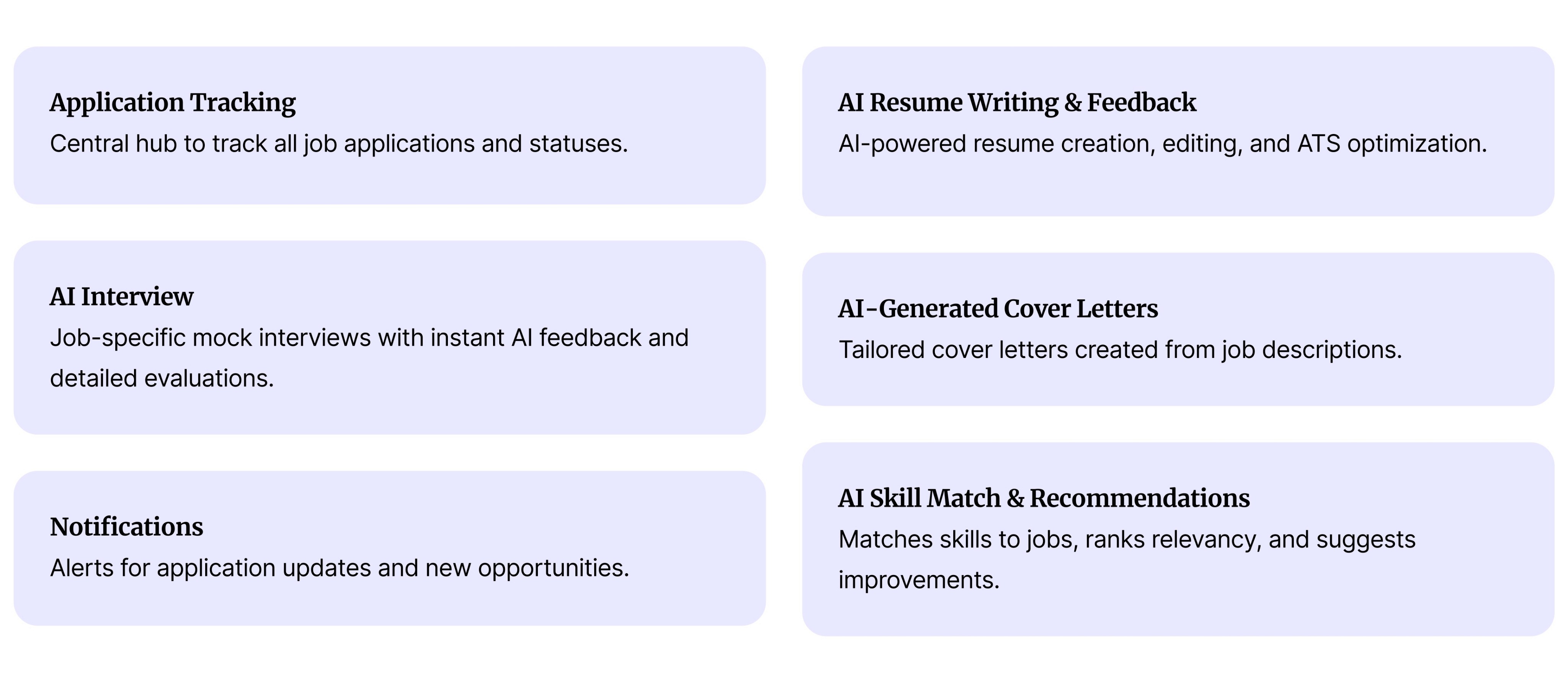
Through idea exploration and user research, we identified core solutions designed to make applying jobs easier for jobseekers.
UI Design

Bringing initial ideas to life with our first design iteration.

User test


To evaluate how clear and intuitive the MVP experience was, we conducted usability testing with real job seekers after completing the first version of the platform.


Participants were asked to go through the entire flow — from sign-up to exploring the dashboard and trying the AI Job Suggestions — and share what felt clear, confusing, or unexpected.


To evaluate how clear and intuitive the MVP experience was, we conducted usability testing with real job seekers after completing the first version of the platform.


Participants were asked to go through the entire flow — from sign-up to exploring the dashboard and trying the AI Job Suggestions — and share what felt clear, confusing, or unexpected.


Learning from users: Testing & refining our design

• Users quickly understood that the Dashboard was the main hub

• Many users were confused about what to do immediately after signing in

• Some felt overwhelmed when asked to complete their Bio before seeing any jobs

• Users quickly understood that the Dashboard was the main hub.

• Many users were confused about what to do immediately after signing in.

• Some felt overwhelmed when asked to complete their Bio before seeing any jobs.

User test


To test how clear and intuitive our design was, we conducted usability testing with job seekers after completing the MVP.
We asked them to walk through the flow — from sign-up to exploring the dashboard and job suggestions — and share what stood out, what felt confusing, and what they expected next.

• Users quickly understood that the Dashboard was the main hub.

• Many users were confused about what to do immediately after signing in.

• Some felt overwhelmed when asked to complete their Bio before seeing any jobs.

Validating Our Design Decisions

We gathered qualitative feedback to better understand perceptions. Responses showed us where the value was clear and where flow adjustments were needed.

User Feedback

“I thought I’d see job suggestions right away, but I had to figure out where to start. It felt overwhelming.”

“Once I completed my Bio, the suggestions made sense but I wish I’d gotten there faster.”

“I like that everything is tracked in one place. I don’t need my spreadsheet anymore.”

Validating Our Design Decisions

Validating Our Design Decisions

To deeply understand user perceptions, we collected qualitative feedback throughout the sessions.


These insights showed us that while the value of the platform was clear, the starting point and flow needed improvement.

User Feedback

“I thought I’d see job suggestions right away, but I had to figure out where to start. It felt overwhelming.”

“I thought I’d see job suggestions right away, but I had to figure out where to start. It felt overwhelming.”

“Once I completed my Bio, the suggestions made sense — but I wish I’d gotten there faster.”

“I like that everything is tracked in one place. I don’t need my spreadsheet anymore.”

“I like that everything is tracked in one place. I don’t need my spreadsheet anymore.”

User Testing revealed that Users Wanted to see Job Suggestions Immediately, but the System Needed Bio Data for Meaningful and personalized Matches.

User Testing revealed that Users Wanted to see Job Suggestions Immediately, but the System Needed Bio Data for Meaningful and personalized Matches.

Our solution:

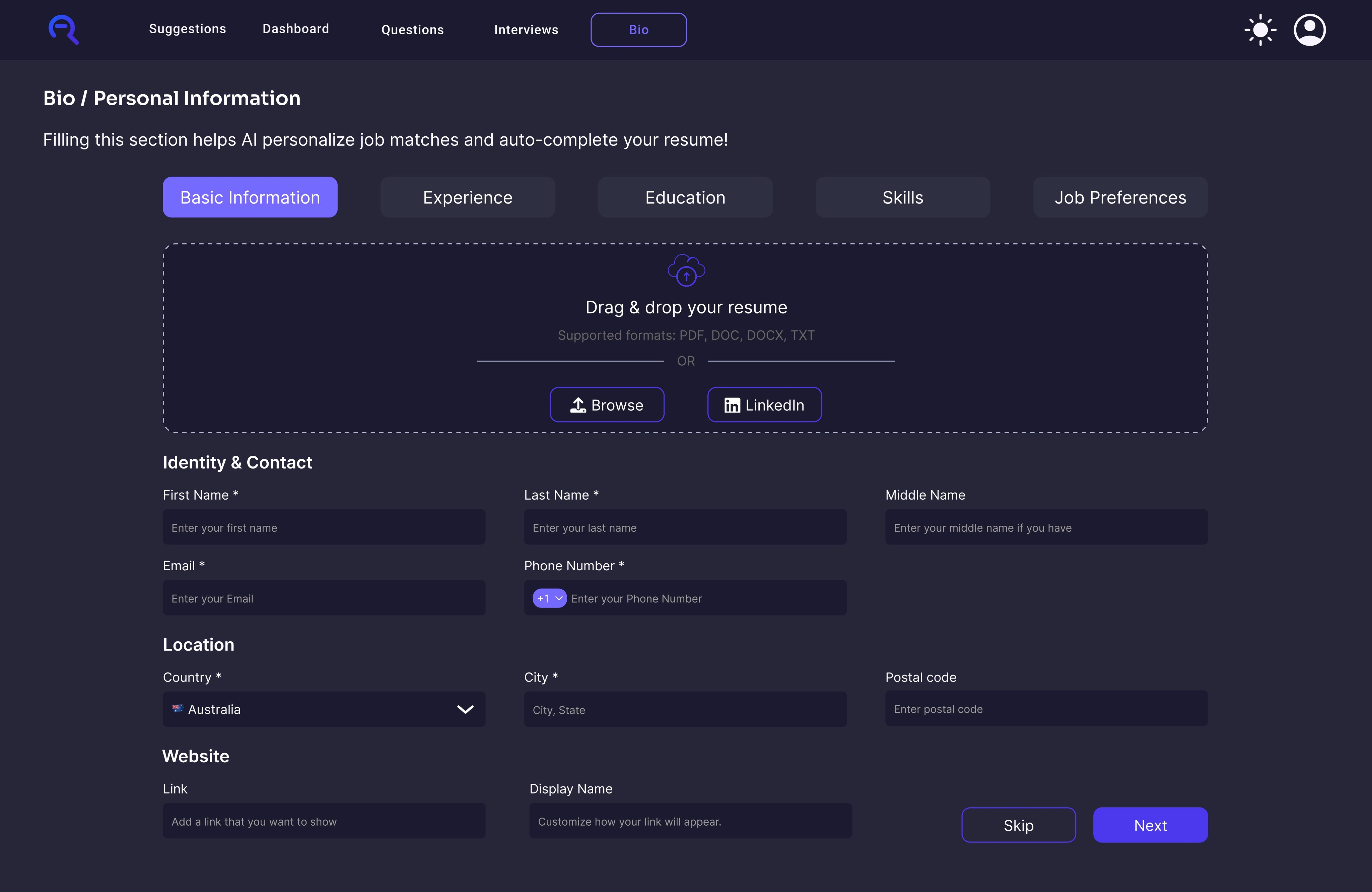
• Make the Bio page the first step after sign-up.

• Added progress indicators to guide users step-by-step

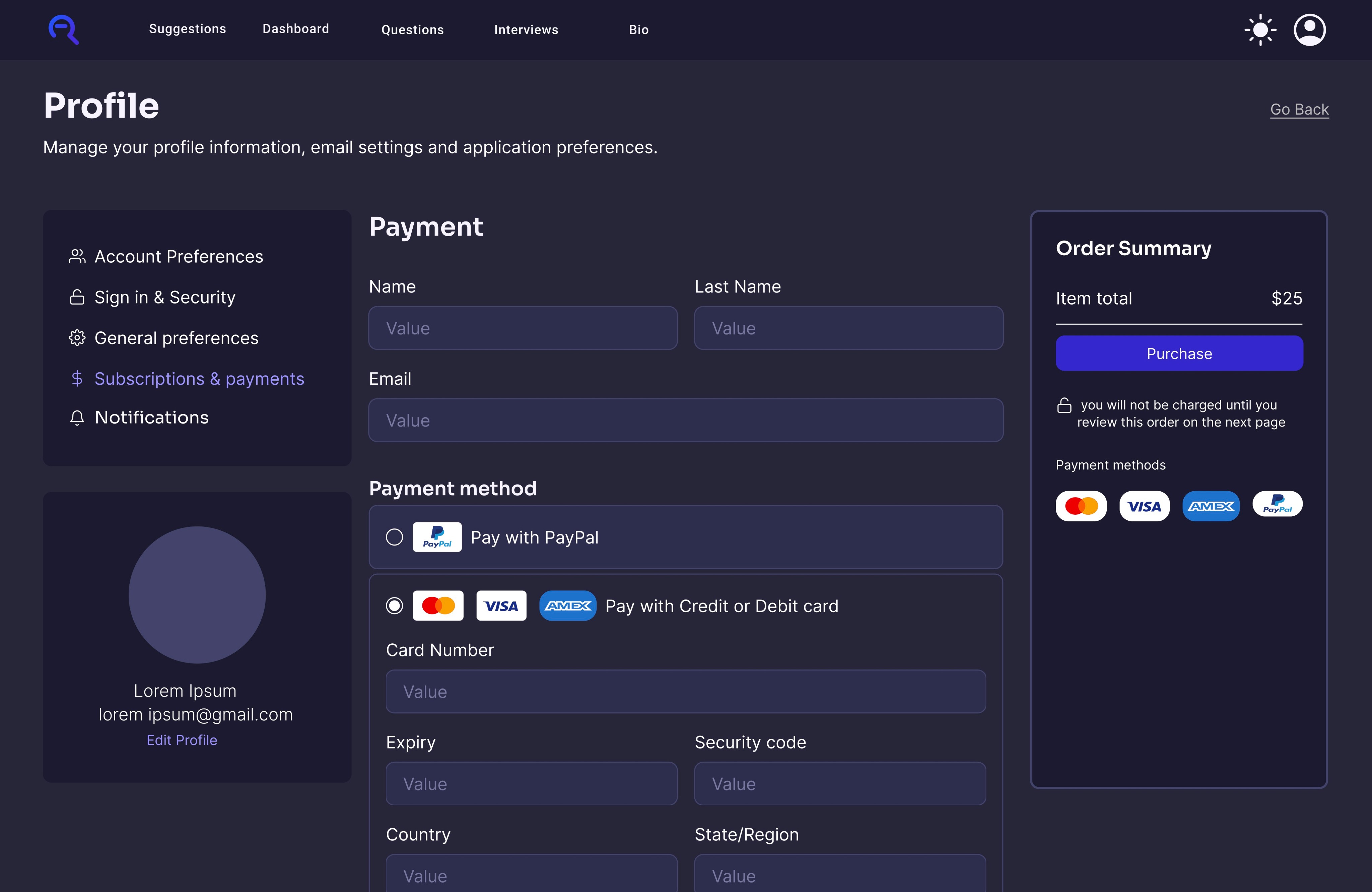
• Renamed Dashboard → Applications to clarify its purpose as a management hub, not a starting page

Iterations & Design Improvements

After iteration, follow-up testing showed higher clarity and satisfaction:


• Users felt guided instead of lost.

• Job suggestions appeared at the right moment — once user profiles were ready

• The flow reduced overwhelm and boosted trust in the platform.

• Task completion time improved by 15%

• User success rate improved by 25%


Additionally, our AI Job Suggestion feature, powered by Bio data and the AI-driven Skill Match & Apply system,

reduced job browsing time by 10%, helping users reach relevant jobs faster with less friction.

After iteration, follow-up testing showed higher clarity and satisfaction:


• Users felt guided instead of lost.

• Job suggestions appeared at the right moment — once user profiles were ready

• The flow reduced overwhelm and boosted trust in the platform.

• Task completion time improved by 15%

• User success rate improved by 25%


Additionally, our AI Job Suggestion feature, powered by Bio data and the AI-driven Skill Match & Apply system, reduced job browsing time by 10%, helping users reach relevant jobs faster with less friction.

Impact After Iterations

Impact After Iterations

Users after filling their information goes to the "AI Job Suggestion" page

Make the "Bio" page first page after sign-up

Add Progress Indicators to guide users

Renamed "Dashboard" to "Applications" so it's clear it's a management hub

Users after filling their information goes to the "AI Job Suggestion" page

Make the "Bio" page first page after sign-up

Add Progress Indicators to guide users

Renamed "Dashboard" to "Applications" so it's clear it's a management hub

Users after filling their information goes to the "AI Job Suggestion" page

Make the "Bio" page first page after sign-up

Add Progress Indicators to guide users

Rename "Dashboard" to "Applications" so it's clear it's a management hub

Our solution showed that blending AI automation with human-centered design can significantly improve users’ confidence.

Our solution showed that blending AI automation with human-centered design can significantly improve users’ confidence.

We learned that a well-designed, AI-powered platform that blends automation with human-centered design can simplify complex workflows, keeping users confident, informed, and in control throughout every stage of their job search, from discovering opportunities to preparing for interviews.

What we learned

Next Project

Let'S WORK

Let'S WORK

TOGETHER

TOGETHER

CONTACT NOW

Add a ‘’Solo artist badge’’ to support an emerging artist

Create a free website with Framer, the website builder loved by startups, designers and agencies.